

 English
 عربى

Excellent Technical Team
We boast 15 years of labor protection manufacturing experience, with 400 workers and annual exports over $5 million, capable of stable mass order delivery.


Content
Ask any electrician how long a pair of electrical safety gloves stays good for, and you will hear a range of answers: six months, a year, until they look worn. The truth is more structured. Electrical insulating gloves are good for six months once they are put into service, and up to twelve months if they remain in storage, as long as they pass the required laboratory retests and daily field inspections. These intervals come from standards like ASTM F496 and IEC 60903, and they exist because rubber insulation degrades gradually, even when gloves look perfectly fine from the outside.
There is no universal expiry date stamped on an electrical glove. Instead, the usable life is governed by a retesting schedule. New gloves must be electrically tested before first issue. Once a pair enters regular use, it must be retested every six months from the first day of wear. Gloves that stay in storage but have never been issued are retested every twelve months.
| Stage | Retest Interval | Reason |
|---|---|---|
| Before first issue | Tested and certified | Establishes the initial electrical integrity of the glove |
| In service | Every 6 months | Real-world handling, flexing and exposure cause gradual degradation |
| In storage, not issued | Every 12 months | Ozone, UV and temperature still affect rubber over time |
| After failed test or damage | Removed from service immediately | A damaged insulating layer cannot be safely re-certified |
A common question is whether the clock resets after each test. Once gloves are put back into service following a successful retest, the six-month countdown starts again from that date of return to service. For stored gloves, the twelve-month interval continues from the previous test date. Keeping a simple log of first-issue dates and retest dates is the best way to stay compliant.
Electrical gloves are classified by the maximum voltage they can protect against, not by how long they can be used. A Class 00 glove rated for 500 volts AC and a Class 4 glove rated for 36,000 volts AC both follow the same six-month in-service retest rule. The class affects what you buy, but not how long it stays good.
| Class | Max AC Use Voltage | Max DC Use Voltage | Typical Color Coding |
|---|---|---|---|
| 00 | 500 V | 750 V | Beige |
| 0 | 1,000 V | 1,500 V | Red |
| 1 | 7,500 V | 11,250 V | White |
| 2 | 17,000 V | 25,500 V | Yellow |
| 3 | 26,500 V | 39,750 V | Green |
| 4 | 36,000 V | 54,000 V | Orange |
Not every task needs the highest class. Selecting the correct class for your working voltage is part of keeping the gloves good for their full service life, because operating near the upper limit places more stress on the insulation than low-voltage use.
The six-month laboratory retest is only half of the story. Between retests, the most reliable way to know whether your gloves are still good for work is the daily inspection performed by the user. Before every shift, inflate the gloves with air and check that they hold it evenly. Listen for escaping air and watch for bulges that indicate weak spots.
Visually examine the entire surface, including the cuffs. Look for punctures, cuts, abrasions, swelling, embedded metal chips, and the fine cracking caused by ozone or sunlight. Any glove that fails the air test or shows visible damage should be pulled from service immediately, regardless of its retest date.
This daily habit is also what protects workers most when gloves are close to the end of the six-month window. Rubber that has been flexed thousands of times at a job site is simply not as predictable as a fresh pair, and the daily inspection is the final gate before certification matters.
How a pair of electrical gloves is treated between shifts has a direct effect on how long it remains good. Rubber insulating gloves should be stored in their original bag or a canvas roll, away from direct sunlight, heat, oil, sharp objects, and ozone sources such as electric motors and welding equipment. Folding them casually or stuffing them into a toolbox with metal tools is one of the fastest ways to shorten their life.
Always wear leather protector gloves over rubber insulating gloves. The leather layer absorbs the punctures, snags and abrasion that would otherwise end the insulating glove's service life in weeks rather than months. Protectors should be sized to fit comfortably over the insulating glove without bunching.
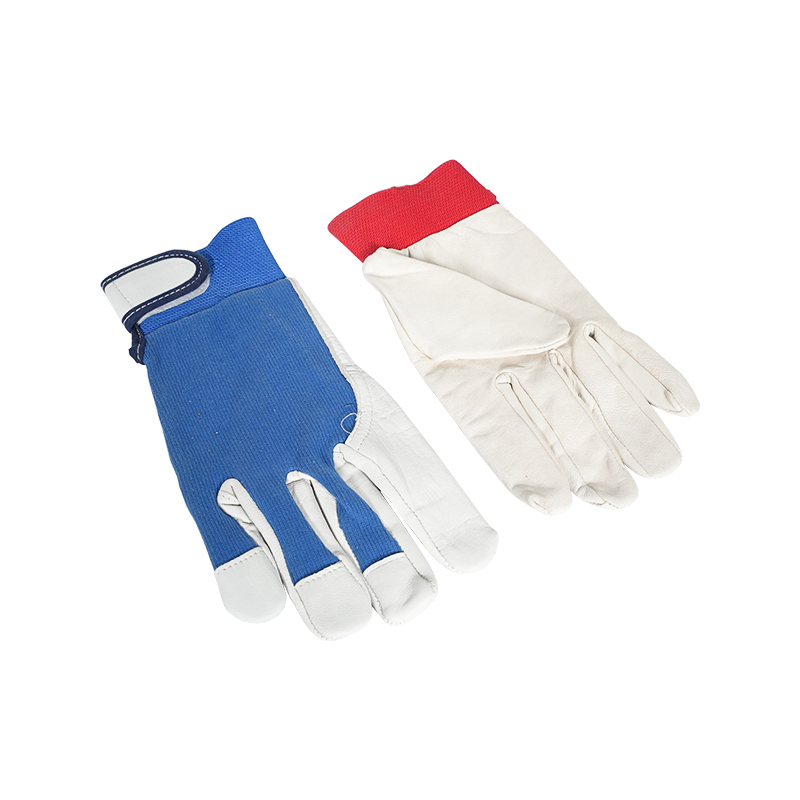 Leather Work Gloves for Heavy-Duty ProtectionThese leather work gloves offer durable abrasion and puncture resistance, making them a reliable outer layer to pair with insulating gloves for extended service life.View Product →
For teams that manage large inventories, it helps to assign each pair of electrical gloves to a specific worker and keep a simple record card showing the first-issue date, each retest date, and any damage observations. This small administrative step is often what separates a disciplined safety program from a reactive one.
Some gloves should never be sent for retesting in the first place. If a glove has suffered an electrical incident, has a visible puncture or tear, has developed deep ozone cracks, or is sticky or swollen from contact with oil or solvents, it should be replaced straight away. Laboratory retesting verifies insulation integrity; it does not repair physical damage.
Gloves that become stiff, discolored, or uncomfortable to wear for long periods are also signs that the rubber has aged. Even if an aging pair passes a retest, many safety managers choose to replace gloves at the end of a certified service cycle rather than extend it, and this conservative approach is perfectly aligned with the six-month rule.
A good rule of thumb: if you are asking whether a pair of electrical gloves is still good, and the retest date is approaching, replacing the pair is usually the most cost-effective decision. The price of a new pair of gloves is minuscule compared with the cost of an electrical injury.
So, how long are electrical gloves good for? In service, six months; in storage, twelve; and for as long as they pass each retest and every daily inspection. The question is really about whether you have the testing schedule, storage habits and inspection routine to back up those dates.
For workers selecting gloves for different tasks, the class rating matters just as much as the testing schedule. Understanding how PPE choices differ across high-risk industries helps you match the right hand protection to the right environment.
If you are reviewing your electrical safety gear and are unsure how to build a reliable inspection and replacement schedule, contact our team. We help industrial and electrical crews choose, size and manage their protective equipment with practical guidance that goes beyond the tag on the glove.
If you have ever stood in front of a glove cabinet and wondered whether the pair on the shelf is still good, you are in good company. It is one of th...
READ MOREHow do we select PPE gloves? The answer is not a one-size-fits-all decision. Every workplace has different hazards, tasks, and levels of exposure. At...
READ MOREAt our company, we have spent years manufacturing personal protective equipment for welders, and one question comes up again and again: how do you pr...
READ MOREYourYour email address will not be published. Required fields are marked *


We provide reliable and comfortable protective equipment, sold worldwide.
yuanang94@gmail.com
86-19710572790
Wuji County, Shijiazhuang City, Hebei Province, China
 Custom One-Stop PPE Safety Protection Manufacturers