

 English
 عربى

Excellent Technical Team
We boast 15 years of labor protection manufacturing experience, with 400 workers and annual exports over $5 million, capable of stable mass order delivery.


Content
When you work in welding, the shoes on your feet are not simply part of a uniform. They are one of the most important barriers between your body and hazards such as falling objects, hot sparks, molten metal, and sharp debris. A question we hear often is, how tall must a welder's safety shoes be? The direct answer in most workshops is that they should reach above the ankle, which usually means a boot of at least 6 inches in height. But the full answer depends on the standard your employer follows and the specific risks in your work area.
Most safety managers, welding instructors, and industry guidelines describe the minimum height as ankle coverage. In practical measurements, a boot that stands roughly 6 inches high, measured from the bottom of the sole to the top of the collar, provides this coverage for an average adult. Some programs define the requirement as footwear that reaches above the ankle, with about 5 inches measured from inside the boot. This is why high-top or mid-calf welding boots are much more common than low-cut safety shoes. Wearing low shoes can leave the ankle bone exposed and allow sparks to fall into the shoe while you are positioned close to the work surface.
 Welding Safety Shoes with Tall Boot CoverageThese specialized welding boots provide the ankle and lower shin protection discussed above, shielding against sparks, heat, and impact in hot work environments.View Product →
Welding creates hazards that are not present in many other work environments. Hot spatter and slag can bounce off the floor and hit the lower leg. Molten metal droplets can roll down a pant leg unless the boot shaft covers the area. Radiant heat from the arc can also affect the skin around the ankle and shin. In addition, heavy items such as pipes, beams, and plates can fall during grinding, cutting, or material handling. A taller boot does more than protect against heat; it also shields the ankle and lower shin from impact and penetration. For welders who work in confined positions, the height makes it harder for debris to enter the boot through the opening at the top.
Occupational safety regulations usually focus on performance rather than a fixed number. In the United States, OSHA requires employers to ensure that workers wear protective footwear when there is a risk of foot injury from falling objects, piercing objects, electrical hazards, or hot substances. ASTM F2413 sets performance requirements for impact resistance and compression resistance, but it does not state a minimum boot height. In Europe, EN ISO 20345 covers basic safety footwear, while EN ISO 20349 covers footwear for protection against thermal risks in welding. Neither standard sets a universal height. Instead, the above-ankle requirement appears in many employer policies and technical guidelines, particularly for welding, foundry, and heavy construction work.
| Type | Typical Height | Ankle Coverage | Common Use |
|---|---|---|---|
| Low-cut safety shoe | 3 to 4 inches | Below ankle | Light assembly |
| Mid-cut shoe | 4 to 5 inches | Around ankle | General workshop |
| High-top safety boot | 6 to 8 inches | Above ankle | Welding and most industrial work |
| Tall safety boot | 8 to 10 inches | Well above ankle | Heavy welding and foundry work |
When a workplace policy says that welders must wear safety footwear, it often phrases the rule as above ankle or 6-inch boot. A 6-inch boot is measured from the bottom of the sole to the top of the collar. This height is enough to protect the ankle joint and the lower part of the shin from sparks and moderate impact. Some employers, especially those in foundries or heavy structural welding, require 8-inch boots because they offer more coverage and keep the tongue of the boot sealed more effectively. Others allow 6-inch boots but require leather spats or gaiters to cover the laces and upper area. The important point is that the height must be sufficient to keep the ankle protected in the position and posture you use while welding.
 High-Cut Safety Boots for Ankle SupportThis line of high-top safety boots offers the ankle coverage and material durability needed for welding, with options for toe caps and slip-resistant soles.View Product →
Height alone does not make a safety shoe suitable for welding. The materials and construction matter just as much. When you evaluate welding footwear, look for these features:
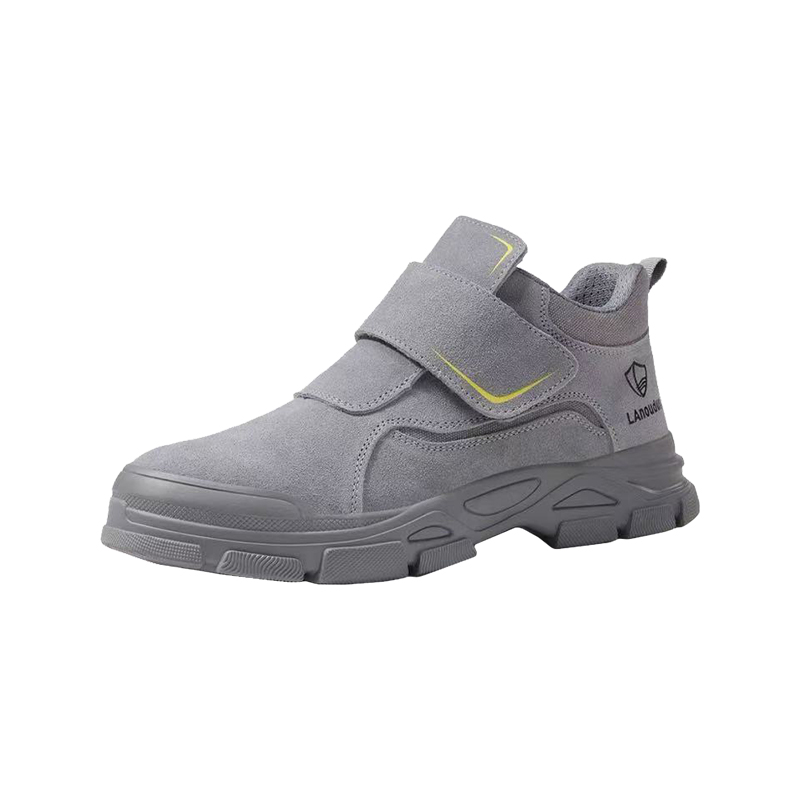 High-Temperature Resistant Safety ShoesDesigned for extreme heat and hot debris, these shoes complement the fitting guidance by delivering thermal protection for foundries and smelting work.View Product →
Before you choose a pair, measure the boot height properly. Place the boot on a flat surface and measure from the bottom of the sole to the top edge of the collar at the back of the boot. Then compare that measurement to your workplace policy. Your ankle bone should sit below the top edge of the boot when you stand upright. If the top of the boot presses against the ankle bone, the height is too low. When you try on safety footwear, wear the same type of socks you use at work and walk around to make sure the collar does not slide below the ankle. Finally, check your workplace safety plan, because many sites list the exact height, style, and certification required for welding positions.
Finding the right answer to how tall must a welder's safety shoes be starts with the height of the ankle, then moves to the material and protection features that suit your specific operation. In most cases, a 6-inch boot with a heat-resistant outsole and impact-resistant toe is the practical minimum. Taller boots are better for more demanding work. If you are unsure how to build out your PPE program, our guide to selecting PPE for different high-risk industries can help you compare requirements, and you can always contact our team for advice based on your situation. The goal is simple: keep the ankle covered, keep the materials resistant to heat and impact, and keep your welders safe throughout the working day.
When you're underneath a car with a welding torch in your hand, the wrong pair of gloves makes itself known within seconds. Automotive exhaust weldin...
READ MOREHow do we select PPE gloves? The answer is not a one-size-fits-all decision. Every workplace has different hazards, tasks, and levels of exposure. At...
READ MOREHands absorb more occupational injuries than almost any other part of the body, and cuts are among the most common. In workshops, warehouses, glass p...
READ MOREYourYour email address will not be published. Required fields are marked *


We provide reliable and comfortable protective equipment, sold worldwide.
yuanang94@gmail.com
86-19710572790
Wuji County, Shijiazhuang City, Hebei Province, China
 Custom One-Stop PPE Safety Protection Manufacturers