

 English
  عربى
عربى 
Excellent Technical Team
We boast 15 years of labor protection manufacturing experience, with 400 workers and annual exports over $5 million, capable of stable mass order delivery.


Content
If you have ever stood in front of a glove cabinet and wondered whether the pair on the shelf is still good, you are in good company. It is one of the questions we hear most often from maintenance supervisors, electrical contractors and safety officers, and it deserves a better answer than "it depends on the pair."
So here is the practical version. A rubber insulating glove that is actively in service should be electrically retested every six months. A new pair that has never been issued should be retested before use once more than 12 months have passed since its date of manufacture. Those two numbers cover most of what people mean by shelf life. Everything beyond that, meaning how many years a working pair actually survives, comes down to storage, handling and the condition checks your crew really performs.
Rubber insulating gloves run on two separate timelines, and mixing them up is where most of the confusion starts.
The first is the storage clock. Every glove carries a date of manufacture, and that date matters most for pairs that have been sitting in a warehouse or a service van. Unissued gloves can normally enter service within 12 months of manufacture; past that point they need a dielectric test before anyone wears them on energized work. Rubber does not have to be worn out to change, because ozone, heat and time affect it in the box just as surely as they do on the job.
The second is the in-service clock, which starts the day the glove is issued. From that moment the six-month retest interval governs, whether the glove has been worn once or a hundred times.
| Milestone | Timing | What it means |
|---|---|---|
| Date of manufacture | Stamped on the glove | Starts the storage clock for pairs that have not been issued |
| First issue | When the glove enters service | Test before first use and record the in-service date |
| In-service retest | Every 6 months | Laboratory dielectric test; gloves past this date are out of service |
| Unissued stock | 12 months from manufacture | Retest before use even if the glove has never been worn |
| Field check | Before every use | Visual inspection plus air test by the wearer |
Written programs vary between employers and jurisdictions, so treat this as the common baseline rather than a substitute for the procedure your own site has adopted.
"Arc flash glove" is a working term rather than a formal product category. In most specifications the item behind the name is a rubber insulating glove, made to ASTM D120, tested to a voltage class and worn with a leather protector over it. Classes run from 00, rated for 500 volts AC, up to class 4 for 36,000 volts, and the class must match the maximum voltage your hazard assessment identifies.
There is a second family of products that also answers to the name: arc-rated gloves tested for thermal protection as part of an arc flash suit. That is a different test standard aimed at a different hazard. Shock protection calls for the voltage-rated rubber glove, thermal protection calls for the arc-rated layer, and plenty of tasks call for both at once.
The six-month figure comes from the practice set out in OSHA 1910.137 and ASTM D120: rubber insulating gloves are tested before first issue and every six months thereafter while in service. This is a dielectric test performed at an accredited laboratory, not the air test a technician does at the back of the van.
A few points tend to trip people up. The clock runs from the test date, not the purchase date. A glove that fails its retest is out of service permanently, because rubber insulating gloves cannot be patched, repaired or reconditioned. And if your operations span several countries, both the interval and the accompanying paperwork can differ, so our comparison of GB national standards and EU CE certification for PPE is a useful starting point for that conversation.
Testing is usually billed per pair and turnaround can run a couple of weeks depending on the lab, which is why most well-run programs keep spare tested pairs in rotation so a crew is never left waiting.
A retest every six months does not remove the obligation to check gloves before each use. The field check is quick, and it catches the damage that happens between lab visits.
Leather protectors are not optional in most programs. They keep the rubber from being cut, abraded or punctured, and they are the cheapest insurance you can buy for a glove that costs real money to test and replace. Our leather work gloves are frequently used as that protector layer over rubber insulating gloves, and they hold up well for general handling of conductors and hardware.
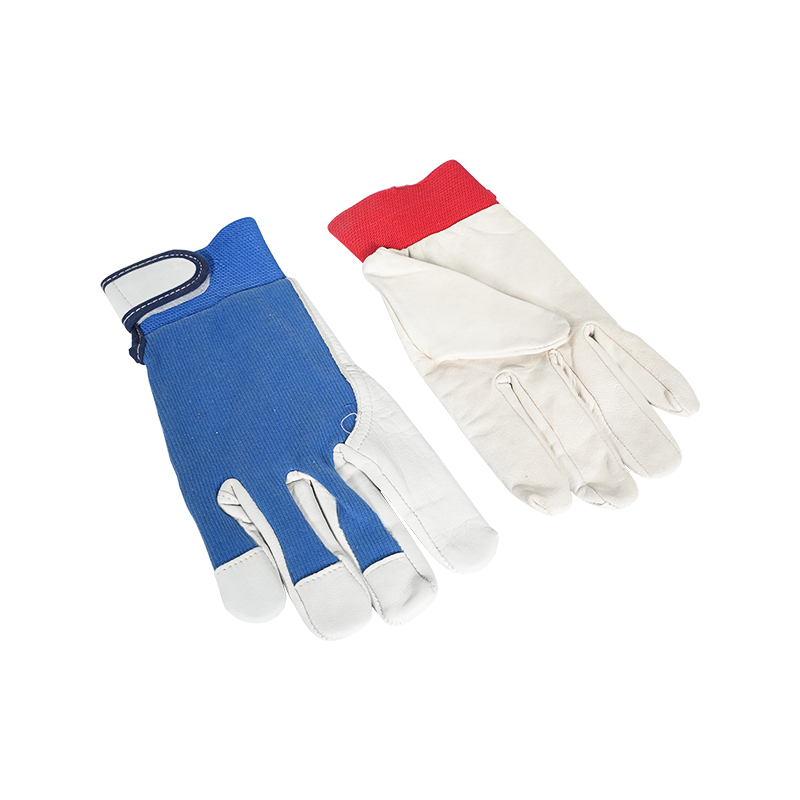 Leather Work GlovesLeather work gloves for use as protective outer layer over rubber insulating gloves, available in grain, reinforced palm, heat-resistant, and cut-resistant styles.View Product →
Age alone rarely kills a glove. In our experience, and in most lab failure reports, the real causes look like this:
There is no standard that says replace every glove after a fixed number of years. A pair that is rotated, stored well and passes every retest can stay in service for several years, while a pair used hard in a dirty environment may fail at its first or second retest. Many utilities plan on roughly one to three years of regular use, but plan is the operative word. What is certain is that any glove which has absorbed a chemical it was not rated for, has been punctured, or has failed a dielectric test is finished.
It sounds like paperwork for its own sake, but the log is what separates a compliant program from a hopeful one. When an inspector asks how old a glove is, the stamped date answers part of the question, and your records answer the rest.
Gloves cover the hands, and the rest of an arc flash ensemble covers everything else: arc-rated clothing, a face shield with a hood or balaclava, hearing protection and footwear. Where step and touch potential matters, electrically insulating safety footwear closes out the path to ground. Our insulating safety shoes are built for exactly that role.
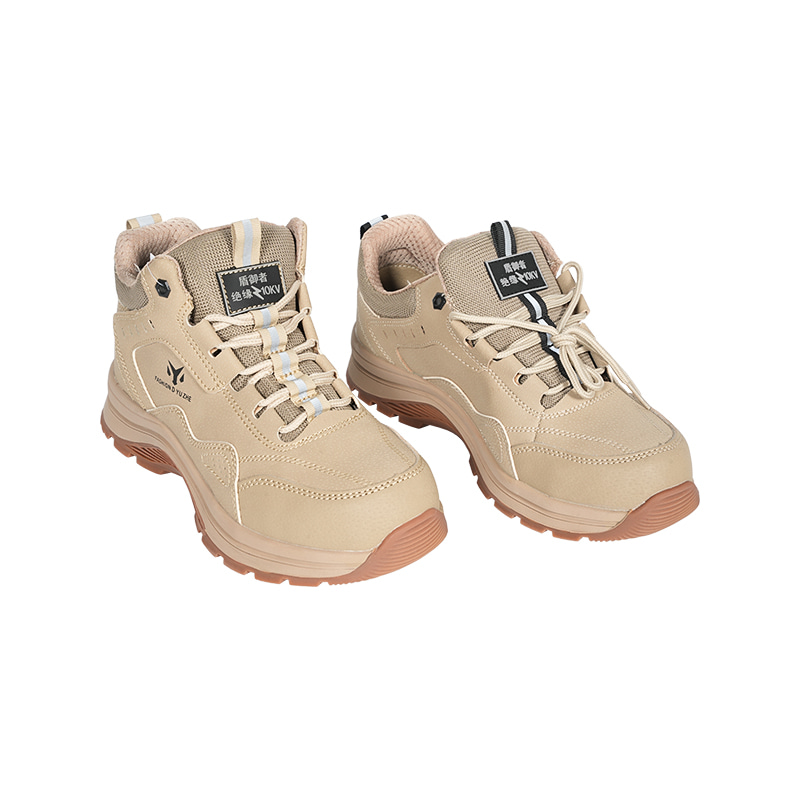 Insulated Safety ShoesInsulated safety shoes for electricians and utility workers, with dielectric materials and composite toe options to reduce shock risk near high-voltage equipment.View Product →
It is worth separating antistatic gloves from voltage-rated gloves, because the names get used loosely. Antistatic gloves manage static discharge in electronics assembly and other ESD-sensitive areas, and they offer no shock protection against line voltage. Our antistatic work gloves are made for that application, so leave them off the list when you are specifying PPE for energized work.
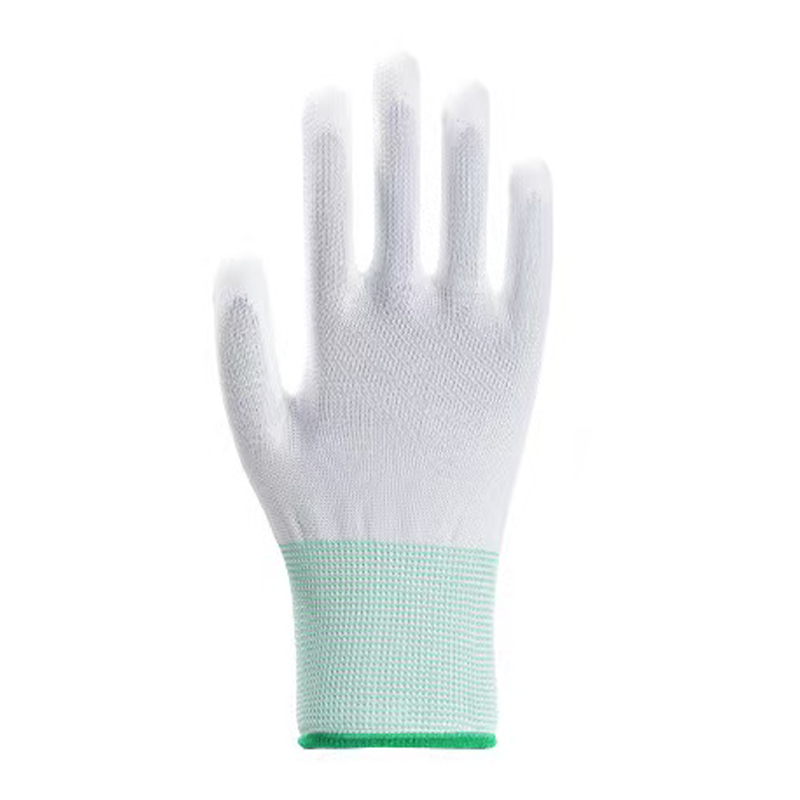 Anti-Static Work GlovesAnti-static work gloves that dissipate static electricity for electronics assembly and ESD-sensitive areas, available in carbon-fiber, copper-fiber, coated, and cut-resistant variants.View Product →
No. The retest date, not the appearance, decides whether a glove is in service. A glove can look perfect and still have lost dielectric strength after a chemical splash or a creeping ozone crack.
Not the way food does, but rubber does age. Unissued gloves should be retested before use once 12 months have passed from the date of manufacture, and older stock should go out first.
If you are sourcing rubber insulating gloves, protectors and the rest of an electrical PPE kit, or you simply want a second opinion on how your glove rotation is set up, our team is glad to talk it through. We manufacture and supply hand, head, face, respiratory, body and foot protection, and we deal with this question often enough to have firm opinions about storage bins and date logs. Reach out through our contact page and tell us what your crew is working on.
How do we select PPE gloves? The answer is not a one-size-fits-all decision. Every workplace has different hazards, tasks, and levels of exposure. At...
READ MOREAt our company, we have spent years manufacturing personal protective equipment for welders, and one question comes up again and again: how do you pr...
READ MOREHow Can Protective Workwear Maintain Breathability in High-Temperature Environments? Workers in foundries, welding bays, chemical plants, and outdoor...
READ MOREYourYour email address will not be published. Required fields are marked *


We provide reliable and comfortable protective equipment, sold worldwide.
yuanang94@gmail.com
86-19710572790
Wuji County, Shijiazhuang City, Hebei Province, China
 Custom One-Stop PPE Safety Protection Manufacturers