

 English
  عربى
عربى 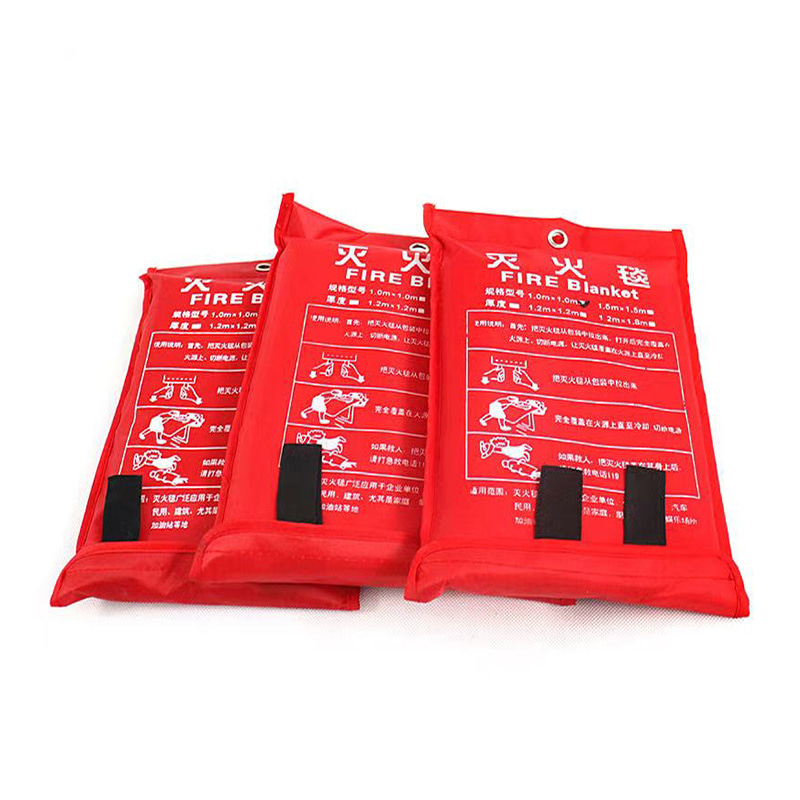
Shijiazhuang Yuanfan Labor Protection Supplies Co., Ltd. is China Fire Protective Blanket Manufacturers and Custom Fire Blanket For Person Suppliers, has a 15-year history of operation. Covering a land area of 10 mu, the company currently employs 400 staff members with an annual production capacity of 600,000 pieces and annual export volume exceeding 5 million US dollars. We are a professional manufacturer and exporter of labor protection products.
Guided by our mission of "Safeguard workers’ safety and empower high-quality industrial development", we uphold the core values of "Safety first, quality supremacy, integrity for win-win results, innovation for long-term progress". We are committed to supplying reliable and comfortable protective gear for clients worldwide.
Supported by large-scale production and rigorous quality control, our products sell well across overseas markets and have earned consistent trust from customers at home and abroad. Going forward, we will keep deepening our layout in the labor protection industry. Through technological innovation to upgrade protection performance, we help build safer working environments and strive to become a trusted supplier of all-in-one labor protection solutions.


Fire Protective Blanket for Person Suppliers

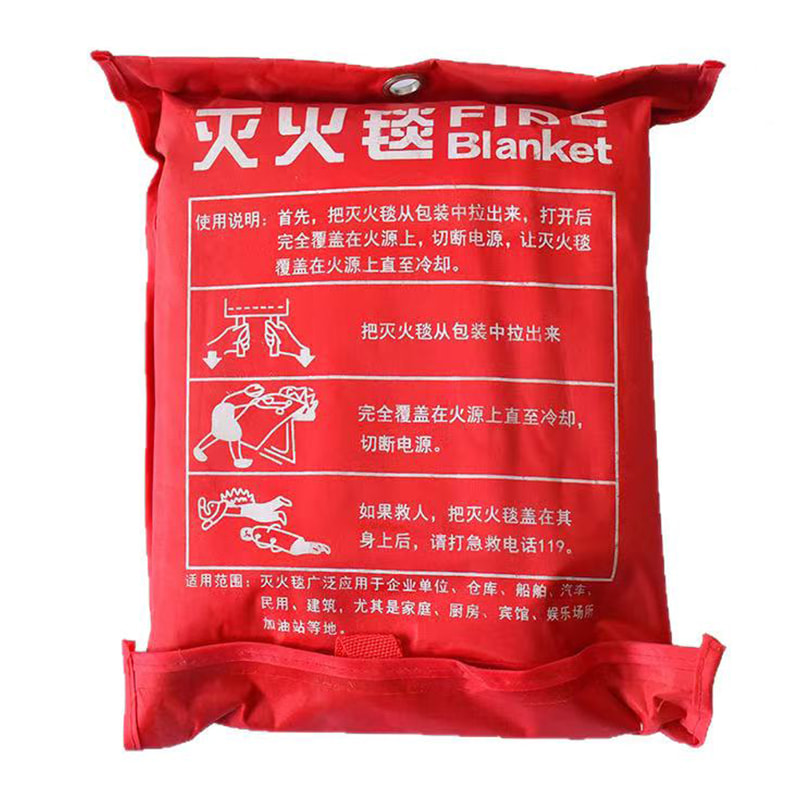
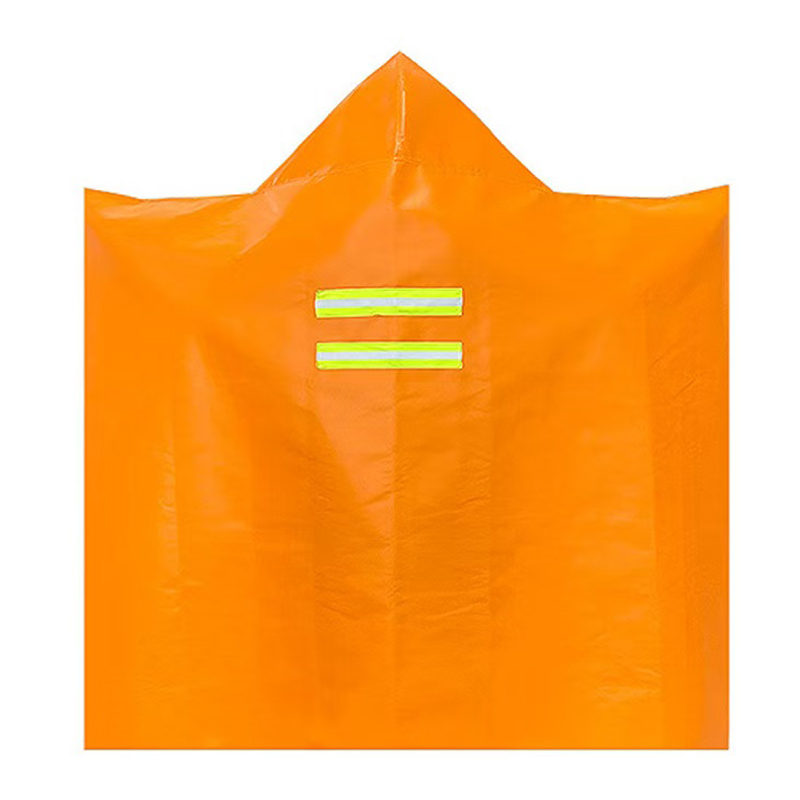
Fire Protective Blanket provides rapid and reliable protection during small-scale fires or emergency evacuations. Crafted from flame-resistant materials such as treated wool or fiberglass, it effectively suppresses flames by cutting off oxygen, offering a safe, user-friendly alternative to conventional fire extinguishers. Ideal for homes, offices, and light industrial settings, the blanket enables immediate response to incipient fires, minimizing property damage and reducing the risk of injury. As a compact, portable fire safety solution, it is an essential component of any comprehensive fire prevention and emergency preparedness plan.
About Us

Supplier of integrated
labor protection solutions
News
-
If you have ever stood in front of a glove cabinet and wondered whether the pair on the shelf is still good, you are in good company. It is one of the questions we hear most often from maintenance supervisors, electrical contractors and safety officers, and it deserves a better answer than "it depe...
READ MORE -
At our company, we have spent years manufacturing personal protective equipment for welders, and one question comes up again and again: how do you protect yourself from electric shock when welding? Electric shock is one of the most serious hazards in any welding environment. Whether you run a small...
READ MORE -
On a construction site, a factory floor, or a warehouse dock, the hard hat is the first piece of personal protective equipment a worker reaches for each morning. But how does a hard hat protect you, really? The answer lies in a combination of a rigid outer shell and an internal suspension system th...
READ MORE
Fire Protective Blanket Industry knowledge
Fire Protective Blanket manufacturer – Shijiazhuang Yuanfan
Shijiazhuang Yuanfan Labor Protection Supplies Co., Ltd. is a direct Fire Protective Blanket manufacturer with 15 years of production experience, 400 employees and an annual export volume exceeding USD 5 million. We supply flame-resistant blankets made from treated wool and high-density fiberglass fabrics for industrial plants, commercial buildings, warehouses, kitchens and emergency response kits. Our range covers standard and custom sizes, with options for edge binding, hanging loops and storage pouches. Every blanket is produced in our own factory under full-process quality control, ensuring consistent fibre density, thermal barrier performance and mechanical strength.
Product range and positioning
We offer two primary material configurations, each selected according to the working temperature, exposure duration and handling requirements of the application:
| Material | Typical thickness | Continuous temperature | Best suited for |
|---|---|---|---|
| Treated wool (carbonised) | 2–3 mm | Up to 550 °C | Kitchen grease fires, laboratory spills, electrical panel smothering |
| Fiberglass (silica-coated) | 1.5–4 mm | Up to 950 °C | Welding spark protection, industrial furnace areas, emergency escape wraps |
Standard sizes include 1.0 × 1.0 m, 1.2 × 1.8 m and 1.8 × 2.4 m. Custom dimensions, colour coding and packaging (polybag, carton, blister) are available for bulk procurement programmes.
Application fit and process integration
Fire protective blankets are passive suppression devices that extinguish incipient fires by oxygen exclusion. They are deployed in:
- Industrial manufacturing – welding stations, grinding areas, chemical storage zones where a compact, non-mechanical extinguisher is preferred.
- Commercial kitchens – Class F (cooking oil) fires where water or foam would spread the flame.
- Emergency escape kits – wrapped around the body to shield against radiant heat and flames during evacuation.
- Laboratory and electrical environments – smothering small chemical or electrical fires without conductive residue.
We configure the blanket’s edge finish (hemmed, taped or grommeted) and storage method (wall-mount PVC pouch, roll dispenser or vacuum pack) based on the installation layout and user access pattern.
Critical specifications and performance
Each production lot is tested for the following parameters before shipment:
- Flame resistance – no afterflame or afterglow beyond 2 seconds after removal of ignition source.
- Thermal insulation – heat transfer rate below 4 kW/m² at 1 000 °C for 10 seconds (fiberglass grade).
- Mechanical strength – tensile strength ≥ 800 N/50 mm for fibre fabrics; tear resistance ≥ 40 N.
- Weight per unit area – typically 400–800 g/m² depending on material and thickness.
Our quality control includes visual inspection of weave uniformity, dimensional check (±2 % on length/width) and a burn test on each batch. Compliance evidence is provided with the shipment documentation.
Configuration options and customisation
We support the following customisation levels for project orders:
- Size: any rectangular dimension from 0.5 × 0.5 m up to 2.0 × 3.0 m.
- Edge treatment: stitched hem, aluminium-foil tape or stainless-steel grommets for hanging.
- Packaging: single-piece polybag with header card, bulk carton or private-label box.
- Marking: customer logo, product code, handling instructions or QR code printed on the pouch or blanket edge.
Minimum order quantity for custom sizes is 500 pieces per specification. Standard sizes can be ordered from 100 pieces.
Quality assurance and acceptance testing
Our factory operates a documented quality management system covering incoming raw fabric inspection, in-process seam strength checks and final product testing. For each production batch we retain a sealed sample for 12 months. Buyers may request third-party testing (e.g. SGS, Intertek) at their cost; we coordinate sample dispatch and factory access for the inspector. Acceptance criteria are agreed at the quotation stage and stated on the purchase order.
Packaging, delivery and logistics
Blankets are folded and packed in sealed polybags, then loaded into export cartons (typically 10–20 pieces per carton). Palletisation, shrink-wrapping and container loading are included for FOB/CIF shipments. We ship via sea freight from Tianjin or air freight from Beijing Capital International Airport. Lead time for standard sizes is 15–20 working days after order confirmation; custom orders require 25–30 working days.
Information we use to configure your solution
To prepare a precise quotation and specification sheet, we need the following project data:
- Target application (kitchen, welding, electrical, emergency escape).
- Required blanket size and quantity.
- Preferred material (treated wool or fiberglass) or maximum exposure temperature.
- Edge finish and storage method (wall pouch, roll, vacuum pack).
- Packaging and marking requirements (private label, language, barcode).
- Delivery destination and preferred incoterm (FOB, CIF, EXW).
We provide a technical data sheet and a physical sample (if requested) before mass production.
Frequently asked questions
Can the blanket be reused after deployment?
If the blanket has only been exposed to minor flames and shows no charring, tears or melting, it can be folded and stored again after cooling. We recommend replacing any blanket that has been used to extinguish a fire, because the fabric’s thermal barrier may be compromised.
Do you provide CE or other certification?
We can arrange third-party testing to applicable standards (e.g. EN 1869 for fire blankets) and supply the test report with the shipment. Certification marking on the product or packaging is available upon request.
What is the shelf life of a fire protective blanket?
Stored in a dry environment away from direct UV light, the blanket retains its performance for at least 5 years. We recommend annual visual inspection for dust accumulation, moisture damage or mechanical wear.
Can I order a mixed container with other PPE items?
Yes. As a full-line labour protection supplier, we consolidate fire blankets with Protective Workwear, safety shoes, gloves and other fire emergency supplies in a single container to reduce your logistics cost.
Do you offer a sample before bulk order?
We supply one free sample per specification, with the buyer covering the courier cost. The sample is taken from current production stock and represents the same material and finish as the bulk order.
Related Products and Categories
Our portfolio also includes Products, Two-Piece Protective Workwear for applications with different operating ranges, interfaces or integration requirements.
Get in Touch
YourYour email address will not be published. Required fields are marked *
Have a project in mind? Contact with us
-

Excellent Technical Team
We boast 15 years of labor protection manufacturing experience, with 400 workers and annual exports over $5 million, capable of stable mass order delivery. -

Quality & Innovation for Protective Solutions
We implement strict quality control and continuous technical innovation. Adhering to safety-oriented values, we supply reliable protective gear and offer integrated protective solutions for global buyers.
-
We provide reliable and comfortable protective equipment, sold worldwide.
-
Quick Links
Home About Us Products Application News Contact Us -
Contact
yuanang94@gmail.com
86-19710572790
Wuji County, Shijiazhuang City, Hebei Province, China
Copyright 2026 ©
Shijiazhuang Yuanfan Labor Protection Supplies Co., Ltd.
All Rights Reserved.
 Wholesale Fire Protective Blanket for Person Manufacturers
Wholesale Fire Protective Blanket for Person Manufacturers