

 English
 عربى

Excellent Technical Team
We boast 15 years of labor protection manufacturing experience, with 400 workers and annual exports over $5 million, capable of stable mass order delivery.


Content
When you're underneath a car with a welding torch in your hand, the wrong pair of gloves makes itself known within seconds. Automotive exhaust welding pushes heat, sparks, and sharp metal right up against your hands, and when the protection isn't right, both safety and weld quality suffer. Choosing the right gloves for automotive exhaust welding means balancing heat resistance, dexterity, grip, and durability in a way that fits the way you actually work. This guide breaks down every factor that matters, so you can make a confident decision.
Exhaust systems are usually made from thin stainless steel or aluminized steel, and after years of service they carry rust, carbon, and road salt. Welding them means working close to a powerful heat source, dealing with spatter, and gripping components that sit in awkward positions. Ordinary work gloves quickly break down in this environment, and they simply don't provide the insulation your hands need.
A proper welding glove gives you three things: enough heat insulation to keep your hands safe, enough flexibility to control the torch and filler rod, and enough reinforcement to survive the sharp edges of corroded exhaust flanges. When those three factors are balanced, you can weld longer, with less fatigue and fewer mistakes. For a wider perspective on how personal protective equipment should be selected for different high-risk jobs, take a look at our guide to selecting PPE for different high-risk industries.
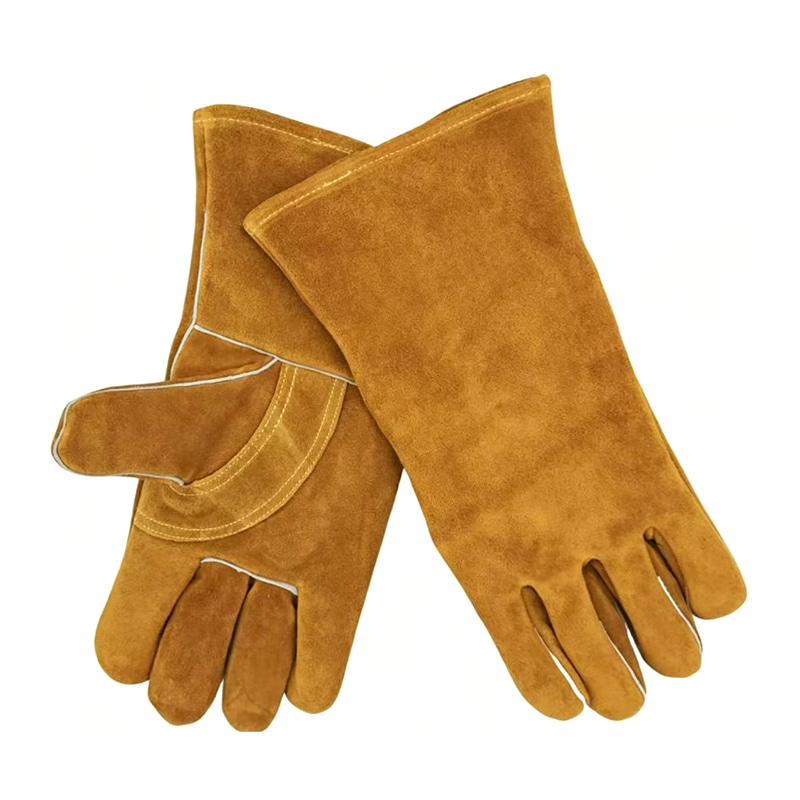 Welding Gloves Range for Automotive Exhaust WorkThis product line offers cowhide, split-leather gauntlet, pigskin, and Kevlar-stitched gloves, sized 8–11, with heat resistance up to 250°C and EN 388 abrasion levels 3–4.View Product →
The material of a welding glove determines almost everything else, including heat resistance, dexterity, feel, and lifespan. Leather is the traditional choice for good reasons: it handles contact heat well, holds up against sparks, and develops a comfortable fit as it breaks in. However, not all leather behaves the same way, so it helps to compare the options side by side.
| Material | Strengths | Things to consider |
|---|---|---|
| Cowhide | Balanced heat resistance, durability, and comfort | Stiffer at first; needs a short break-in period |
| Goatskin | Very flexible with high tear strength | Thinner, so less insulation against intense heat |
| Deerskin | Soft and supple, excellent feel for precise work | Not as durable in rough, dirty conditions |
| Grain-split leather | Affordable and heat resistant | Stiffer and less comfortable on long jobs |
| Para-aramid blends | High cut and heat resistance | Usually used as a lining rather than an outer layer |
Cowhide is the most common choice for automotive exhaust welding because it offers a balanced mix of heat protection and durability without sacrificing too much feel. Goatskin is an excellent alternative when you do more precise work and want to feel the filler rod through the glove. Whichever material you choose, the glove should be reinforced over the palm, thumb, and index finger, since those areas take the most heat and abrasion when you are holding a torch over an exhaust pipe.
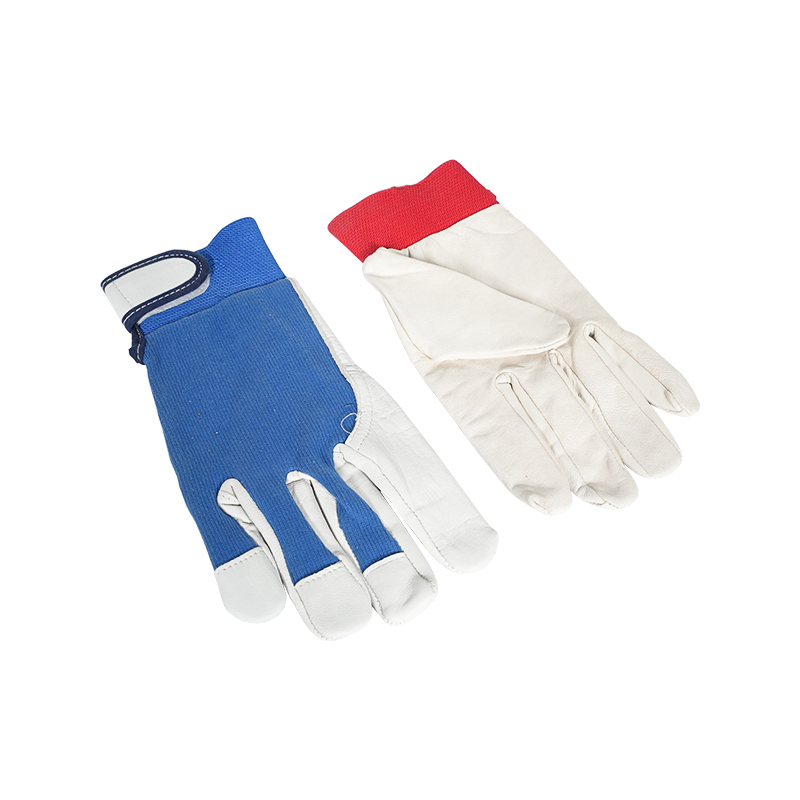 Leather Work Gloves Category for Heavy-Duty ProtectionExplore multiple leather glove styles in cowhide, pigskin, or goatskin, with options for cuffs, linings, and reinforcement, meeting EN 388 standards for abrasion and tear resistance.View Product →
When you compare different gloves, the fastest way to narrow the options is to check the standard they were tested to. In Europe, EN 407 is the relevant standard for gloves that protect against heat and flame, and in North America, ANSI/ISEA 138 covers heat-protective gloves used in welding. Both standards assign performance levels, so you can see at a glance how much heat a glove can handle before you risk a burn.
| Code | What it tests | Why it matters |
|---|---|---|
| A | Flammability | How long the glove resists ignition |
| B | Contact heat | Protection when touching hot metal |
| C | Convective heat | Exposure to hot air while welding |
| D | Radiant heat | Heat radiating from the welding arc |
| E | Molten metal splashes | Resistance to small droplets of spatter |
| F | Molten metal flow | Resistance to larger splashes |
For exhaust welding, the performance levels for contact heat (code B) and small molten metal splashes (code E) matter most, because you will regularly touch hot pipes and work in the middle of spatter. A glove that performs well in those two areas gives you the confidence to work steadily instead of pulling your hand away every time the torch throws sparks. If your work sometimes involves prolonged welding or intense preheating, consider a dedicated high-temperature glove built for harsher conditions.
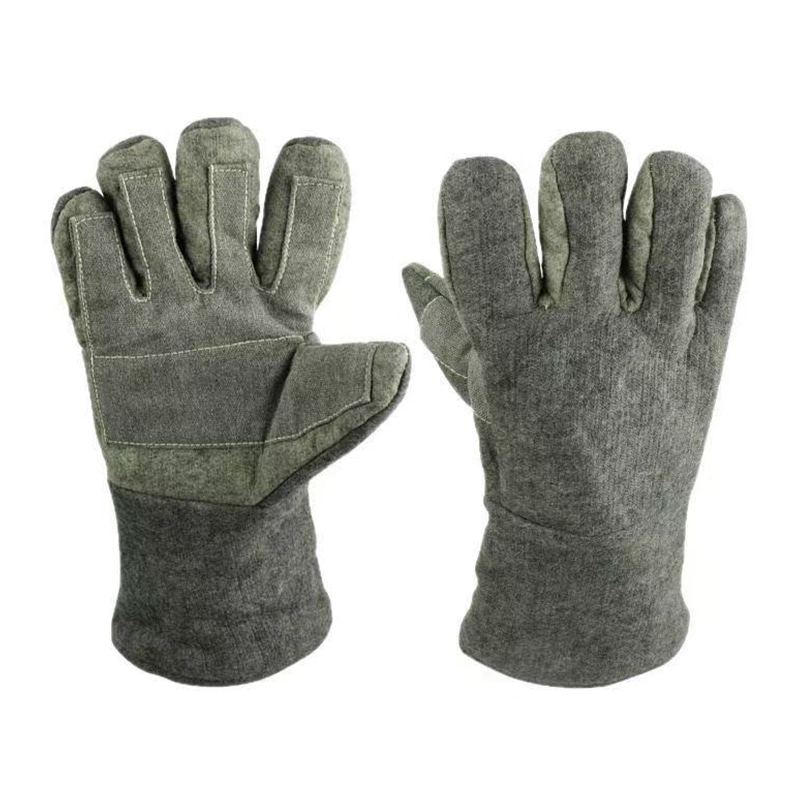 High-Temperature Resistant Gloves for Extreme HeatAramid, fiberglass, silicone-coated, and multi-layer insulated gloves handle contact heat up to 800°C, with gauntlet lengths and custom options for welding, foundry, and furnace tasks.View Product →
One common mistake is choosing the heaviest glove available and assuming it is automatically the safest. In automotive exhaust welding, the glove must still allow your fingers to move precisely. Thin stainless steel tubing, clamps, and O2 sensor bungs all require a steady hand. If the glove is so thick that you cannot feel the filler rod or adjust your grip, the weld quality drops and your frustration rises quickly.
As a general rule:
A welding glove should fit snugly around the palm and fingers without feeling tight. If it is loose, the glove shifts inside your grip, making the torch harder to control and creating folds where sparks can settle. If it is too tight, your hand tires quickly, and the reduced circulation makes long jobs more draining.
Cuff style is the other major consideration. A long gauntlet cuff protects the wrist and lower forearm from sparks, which is valuable when you weld under a vehicle in awkward positions. A shorter cuff with an elastic or snap closure gives you more freedom of movement, but leaves the wrist more exposed. Many welders prefer gauntlet-style gloves for exhaust and chassis work because the extra coverage helps in tight spaces where sparks bounce unpredictably.
Comfort details matter too. Some gloves include a soft jersey lining that absorbs sweat and makes the glove easier to pull on and off between welds. Reinforced stitching in high-wear zones adds durability without adding bulk. On a long day of exhaust replacements, small details like these make a real difference.
If you are ordering gloves for yourself or for a workshop crew, run through this checklist:
Even the best welding gloves wear out quickly if they are not cared for. A few simple habits extend their life significantly:
When a glove starts feeling stiff or the inner lining begins to come apart, retire it. Welding with damaged gloves is a common cause of painful burns that could easily have been avoided.
Choosing the right gloves for automotive exhaust welding is not a one-size-fits-all decision. It comes down to understanding the heat and spatter you will face, the precision your technique requires, and the comfort you need to work a full shift. Take the time to compare materials, check the ratings, and feel the fit before committing to a bulk purchase.
If you are selecting gloves for a workshop, a maintenance operation, or a training facility, our team at Yuanfan can help you find the right match. We also support custom designs and branding for bulk orders. Get in touch with our team for recommendations and wholesale options. The right glove makes your work safer and cleaner, and that is worth taking seriously.
When you work in welding, the shoes on your feet are not simply part of a uniform. They are one of the most important barriers between your body and ...
READ MOREHow do we select PPE gloves? The answer is not a one-size-fits-all decision. Every workplace has different hazards, tasks, and levels of exposure. At...
READ MOREPersonal protective equipment (PPE) acts as the key barrier against occupational injuries, yet hazards vary widely across industries, calling for cust...
READ MOREYourYour email address will not be published. Required fields are marked *


We provide reliable and comfortable protective equipment, sold worldwide.
yuanang94@gmail.com
86-19710572790
Wuji County, Shijiazhuang City, Hebei Province, China
 Custom One-Stop PPE Safety Protection Manufacturers